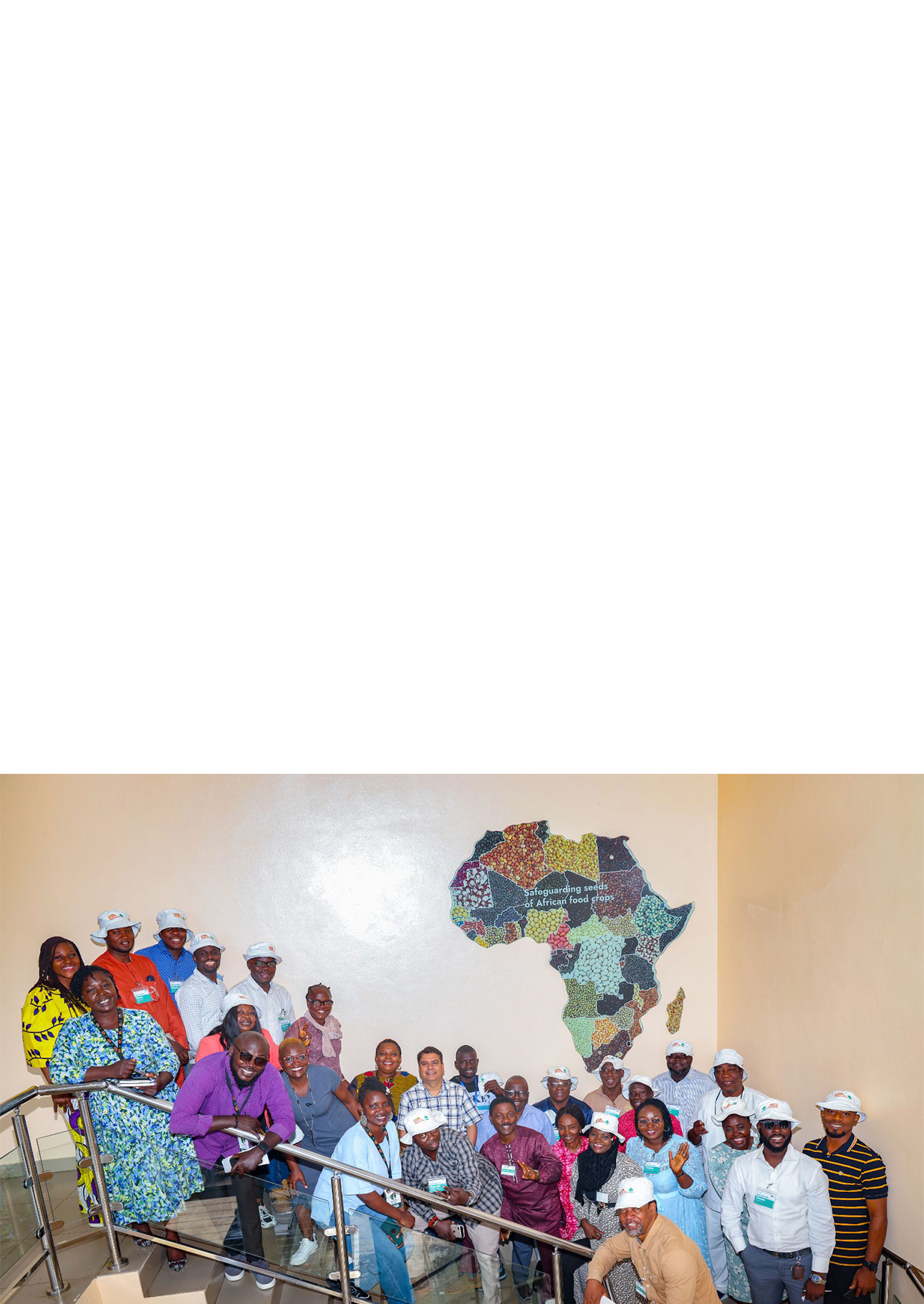
In a targeted response to widespread misinformation about food security, the International Institute of Tropical Agriculture (IITA) has concluded a comprehensive training program for 20 Nigerian media practitioners. The program demonstrated the critical role of bioscience and genebanks in preserving Africa’s agricultural heritage and securing its food future.
Within IITA’s Genetic Resources Center lies a remarkable collection that many Nigerians have never heard of, which includes over 36,000 carefully preserved plant varieties representing decades of agricultural wisdom. From cassava landraces that survived ancient droughts to yam varieties that sustained communities for generations, these genetic resources form the backbone of Africa’s food security strategy.
“Every seed tells a story,” explained Dr. Olaniyi Oyatomi of IITA’s Seed Bank during the training. “When we preserve over 25,000 seed accessions and 9,513 clonal crop varieties, we’re not just storing plant material, we’re safeguarding genetic solutions to tomorrow’s food challenges.”
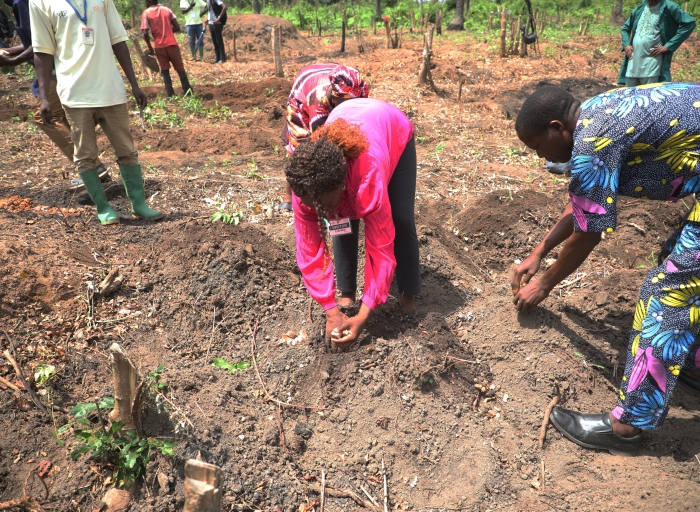
The training took journalists through IITA’s sophisticated facilities, including field banks where cassava, yam, and plantain varieties are maintained in living collections, and the high-tech in vitro genebank laboratory where over 5,000 accessions are preserved in controlled conditions. Some varieties are stored in cryobanks at -196°C, ensuring their survival for future generations.
The program addressed a critical knowledge gap in public discourse about biotechnology. While many associate genetic modification with controversial GMOs, IITA’s work focuses on precision breeding techniques that accelerate nature’s own processes.
“Think of it as advanced selective breeding,” says Dr. Yemi Fajire, IITA Bioscience Laboratory Manager. “Instead of waiting decades to develop drought-resistant crops, molecular breeding allows us to identify and select the best traits in just a few years.”
This scientific approach has already yielded impressive results. Through high-throughput genetic analysis, IITA has identified 97 cassava landraces with natural resistance to heat and drought, which are crucial traits as climate change intensifies across Africa. These discoveries came from analyzing over 17,000 accessions using advanced genomic technologies.
The training program emerged from IITA’s recognition that public confusion about biotechnology was hampering agricultural innovation. Fear-based messaging often conflates precise gene editing with older technologies, creating unnecessary resistance to beneficial innovations.
“Our goal is to shift the conversation from fear to facts,” said Kathy Lopez, Head of IITA Communication Office. “When journalists understand the science, they can help the public make informed decisions about technologies that could transform African agriculture.”
The program equipped journalists with clear analogies and messaging strategies to explain complex scientific concepts to lay audiences. Participants learned to distinguish between different types of biotechnology and to communicate the safety measures governing agricultural innovation.
The trained journalists left with a deeper appreciation for the complexity and importance of agricultural research. Many expressed surprise at the sophistication of IITA’s operations and the global significance of work being done locally.
“This training has improved my knowledge in science, crop improvement, and genetic banking,” said Kazeem Awojodu from Daily Independent Newspaper. “I will share this knowledge with farmers and consumers in my reportage.”
Tolulope Onafowokan, General Manager of Amuludun 99.1 FM, added, “This training clarified many misconceptions I’ve had about breeding and genetically modified seeds. Now, I can educate people on how safe these technologies are and help them get the most out of these facilities.”
With over 1.2 billion people expected to call Africa home by 2050, the continent’s ability to feed itself will depend increasingly on innovations emerging from institutions like IITA. Through initiatives like this training program, the vital work of preserving genetic resources and developing climate-resilient crops is gaining the informed coverage it deserves.
Contributed by Anu Oyeleye