Cowpea, popularly called the “poor man’s meat,” is a staple in Nigeria’s agricultural and nutritional landscape. With about 25% protein, alongside carbohydrates, vitamins, and minerals, the legume plays a critical role in ensuring food security for millions of households.
For decades, however, farmers have struggled with pest infestations, declining yields, poor soil management, and the scourge of adulterated farm inputs.
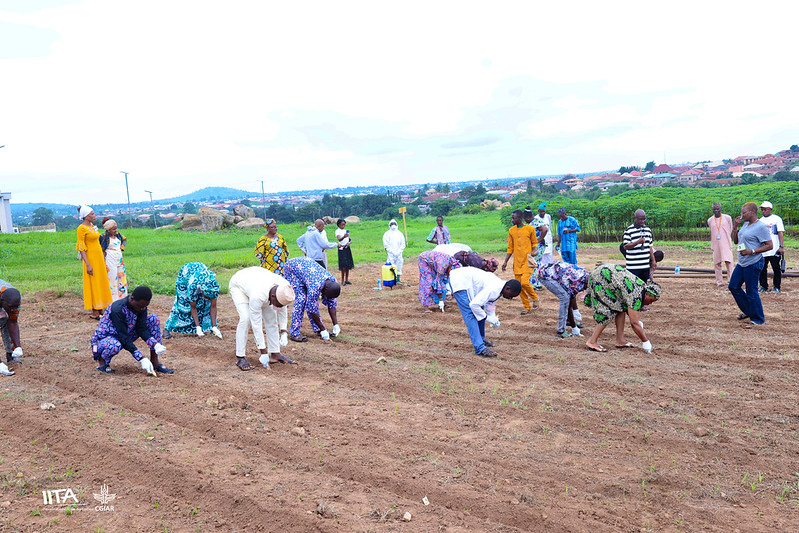
Today, hope is returning to cowpea fields across Southwest Nigeria’s dry savanna regions. The International Institute of Tropical Agriculture (IITA) recently organized another edition of its farmer training program, designed to blend traditional know-how with modern science. The result: healthier plants, better harvests, and renewed confidence among smallholder farmers.
At the training, Prince David Ogundele, Chairman of the Cowpea Association in Oyo State, shared his experience.
“We cowpea farmers have been facing a lot of challenges, especially with adulterated pesticides that sabotage our production,” he said. “Many seasons have been full of frustration as crops withered under pest attacks and poor farm practices.”
IITA’s strategic intervention, led by Bosede Popoola, Cowpea Industrial Trial Manager, has helped change this narrative. What began as an emergency response to crop failures has now evolved into a structured, science-based training program.
Farmers were taught the importance of soil quality, with research showing that cowpea grows best in soils with a pH of 5.5 to 6.5. Planting techniques have also been refined: seeds should be placed at a depth of 2–3 centimeters, with two seeds per hole and rows spaced 75 centimeters apart. Deeper planting, once common practice, was shown to delay emergence and stunt plant growth.
Fertilizer use has been given a scientific upgrade. Instead of guesswork, farmers now apply one bag of NPK mixed with three bags of single super phosphate per hectare. This blend corrects nutrient imbalances and supports vigorous plant growth.
Perhaps the most impactful change lies in pest management.
“With cowpea, it’s not the number of times you spray that matters,” Popoola explained. Farmers were trained to spray just three times — at flower bud initiation, full flowering, and pod development. This maximizes effectiveness while reducing chemical residues.
The knowledge is already bearing fruit. A female farmer who had once been overwhelmed by pest losses shared her renewed optimism:
“Before this training, I always encountered huge losses due to pests and diseases. But with what I’ve learned, I am confident of better results in the next season.”
Through these science-driven practices, IITA is equipping cowpea farmers with the tools they need to restore productivity, improve nutrition, and strengthen food security across Nigeria.
Contributed by Anu Oyeleye