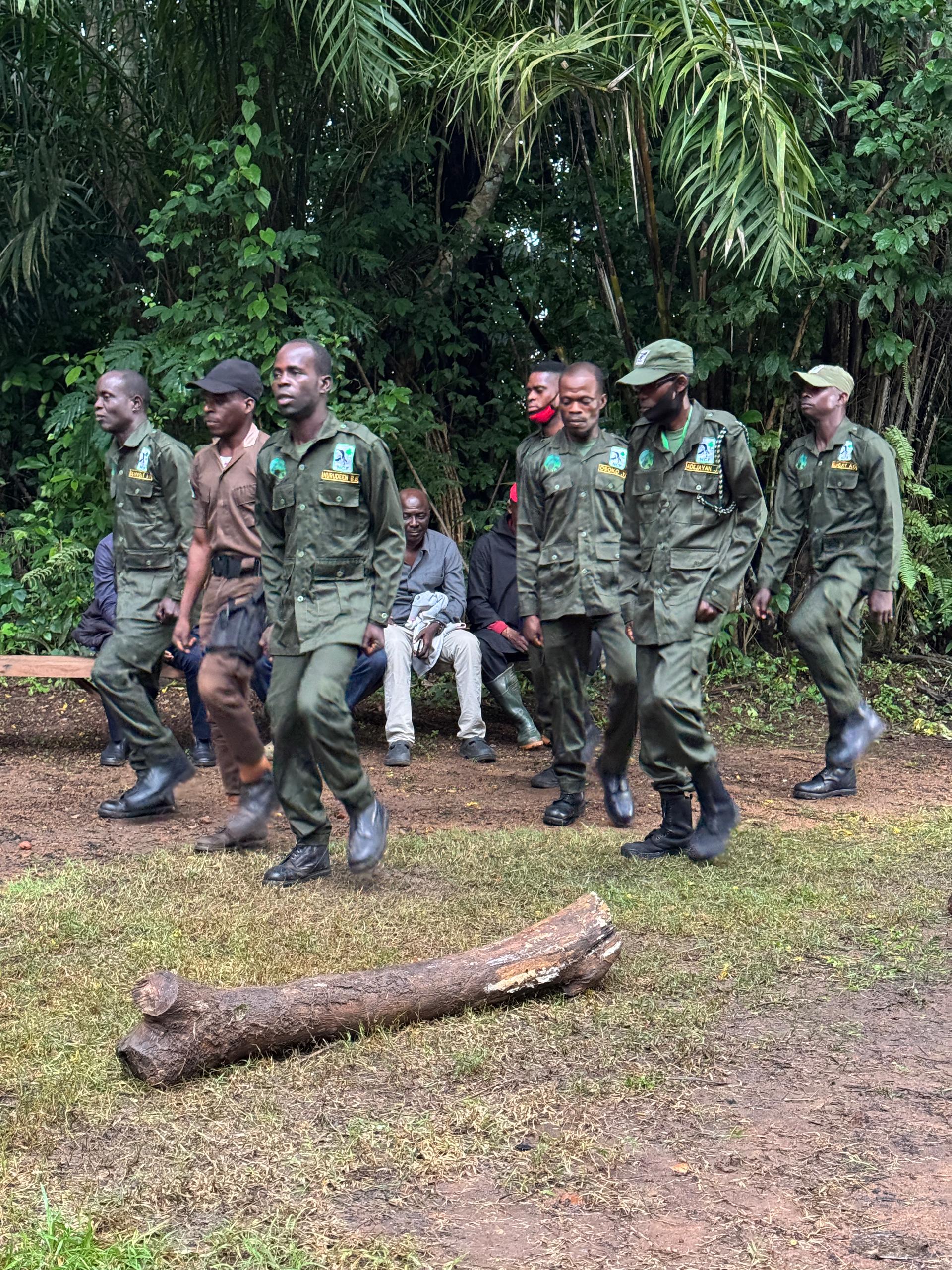
World Ranger Day, observed every July 31, honors the men and women who put their lives on the line to protect the earth’s wildlife and forests. At the Omo Forest Reserve in Ogun State, Nigeria, rangers live this reality daily.
As part of activities marking this year’s commemoration, Wild Africa, one of IITA’s partners, organized a reporting trip to Omo Forest. This gave journalists and development storytellers firsthand experience of the challenges and triumphs of conservation in Nigeria.
During the field tour with Wild Africa’s implementing partner, Nigerian Conservation Foundation (NCF), our anchor, Ranger Emmanuel Olabode, shared the discipline and dangers of his work.
“Once we are on operation, we don’t talk. We use sign language. Silence helps us sight animals or catch intruders like poachers, without alerting them,” he explained.
In Omo, rangers face multiple challenges: harsh weather, mental stress from weeks spent in the forest, and even attacks from poachers and illegal loggers. Yet, their determination remains unshaken. “Elephants are smart animals. They don’t like to hurt humans. Conflict happens when we encroach on their space,” Olabode noted.
Stakeholders echoed these concerns. Representative from the Forestry Research Institute of Nigeria, FRIN, Divisional Forest Program Officer, Ibigbami Oladele, highlighted the need for synergy among government, rangers, and communities to manage the forest sustainably. Local chiefs and farmers admitted that the fertile land tempts many into encroachment, sparking clashes with loggers.
Despite limited funding, NCF and partners like the Wild Planet Trust continue to support conservation and ranger welfare. But as Olabode put it:
“We need more hands, more equipment, and better welfare for rangers.”
Beyond World Ranger Day, the call to support rangers continues. Wild Africa and partners highlight that the courage of Omo’s rangers protects not just elephants and trees, but also the balance between people, nature, and generations yet to come.
Contributed by Dajie Odok