Radio IITA Lead, Dajie Odok, explores the challenges of ensuring that scientific innovations reach the farmers who need them, following her participation in the UK MEET 2026 Nigeria Fellowship.
Developing agricultural technologies is only part of the solution to food production and climate challenges. Ensuring that farmers can access, afford, and adopt these innovations is equally important.
This was a key reflection from the participation of Dajie Odok, Lead of Radio IITA at the International Institute of Tropical Agriculture (IITA), in the 2026 UK Media Excellence for Emerging Technologies (UK MEET) Fellowship.
Selected for the fellowship, Odok joined journalists and content creators for a five-day residential and immersion programme in Abuja from October 19 to 23, 2026. The programme explored emerging technologies and their implications for society, covering artificial intelligence, climate change, biomedical innovation, digital health, clean energy, the circular economy, and elections and technology.
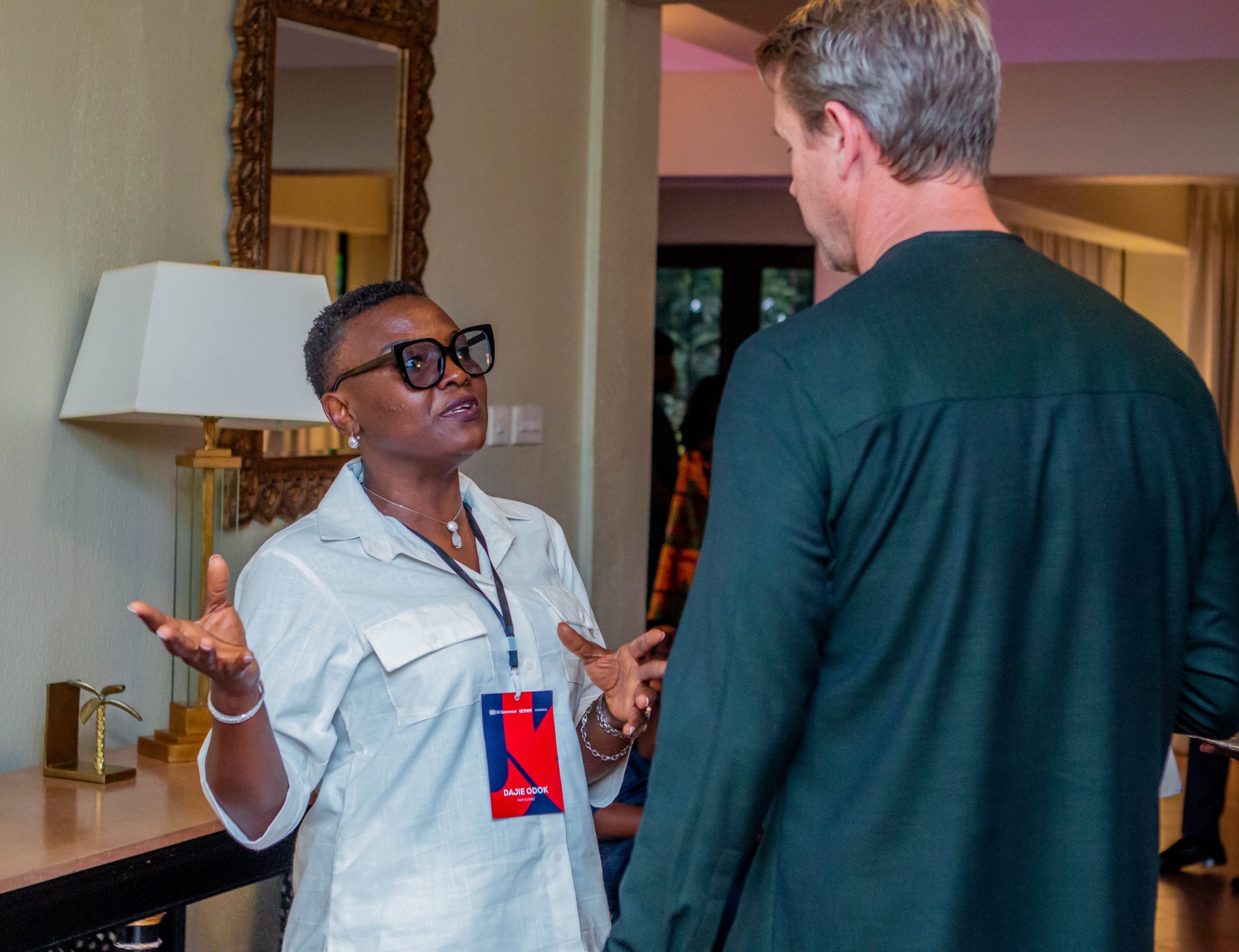
One of the defining moments was a conversation with His Excellency Peter Vowles, British High Commissioner, during the fellows’ visit to his residence.
Their discussion focused on sustainable agricultural innovation and the challenges farmers face in benefiting from technologies developed to improve food production and strengthen resilience to climate change.
The High Commissioner raised an important question about how agricultural information reaches the farmers who need it most, particularly women who cultivate land they may not own or lack control over the resources required to invest in new solutions.
The question struck at the heart of Odok’s work as a science journalist: bridging the gap between researchers who generate knowledge and develop innovations, and farmers who need to understand, access and apply them.
When innovation does not reach the farmer
Through her reporting on agricultural research, climate adaptation and food security, Odok has engaged with farmers navigating unpredictable weather, production challenges and limited access to information and resources.
Their experiences highlight a recurring challenge: an innovation may exist, but can the intended user benefit from it?
Can farmers afford improved seeds? Are the technologies available in their communities? Do they have access to finance, extension services, equipment, and markets?
These factors determine whether agricultural research remains a scientific achievement or becomes a practical tool for improving productivity and livelihoods.
The challenge is particularly significant for women farmers. In many farming communities, women participate actively in planting, weeding, and harvesting but may have limited control over the land they cultivate and the financial resources needed for long-term investments.
This can affect their ability to adopt climate adaptation measures such as irrigation, drainage infrastructure, and improved storage.
During the conversation, Odok recalled a statement by one of her resource persons, Deborah Nwanze, which captures this challenge:
“When women know that rain is coming but cannot afford a drainage system, that is not a knowledge problem; it is a justice problem.”
— Deborah Nwanze, Senior Research Associate and Gender Specialist, International Institute of Tropical Agriculture (IITA).
The observation highlights why providing climate information alone is insufficient. Farmers also need the resources, infrastructure, and decision-making power to respond to what they know.
Connecting research with farmers’ realities
The fellowship also provided an opportunity for Odok to develop a story proposal titled “Can Climate-Resilient Crops Reach the Farmers Who Need Them?”
The proposed investigation builds on her earlier reporting among farmers in Akinyele, Ido and Afijio in Oyo State. It seeks to connect their experiences with research on climate adaptation and opportunity crops, including Bambara groundnut, taro and pigeon pea.
One of the research initiatives of interest is AgVACS, which focuses on climate-smart agronomy and opportunity crops in northern Nigeria and Ghana.
The proposed reporting will examine the evidence behind the research, its potential relevance to farmers elsewhere, and the practical conditions required for adoption. It does not assume that the project is already implementing activities in the Oyo communities visited.
Beyond the agricultural focus, other fellowship sessions reinforced the importance of examining technological innovations in terms of evidence, accessibility, accountability, and real-world impact.
A visit to the Clean Technology Hub in Abuja, for instance, introduced participants to clean energy solutions and circular economy initiatives, including the conversion of discarded plastic into reusable materials. Sessions on biomedical innovation, artificial intelligence, and election technology also highlighted the need for responsible reporting and critical assessment of emerging technologies.
Making research accessible
Odok’s fellowship experience reinforces the importance of effective science communication in agricultural development.
Scientific discoveries and technological advances can significantly contribute to food security and climate resilience, but their impact depends on whether farmers can access and use them.
Agricultural radio, community engagement, extension services, and digital platforms remain important channels for translating research into practical information, connecting farmers with experts and helping them make informed decisions.
For Radio IITA, this underscores the importance of communicating agricultural research in ways that respond to farmers’ information needs and the realities of their farming communities.
Ultimately, the success of agricultural innovation should be measured not only by what researchers develop but also by whether farmers can realistically access, afford, adopt, and benefit from those innovations.
Contributed by Dajie Odok