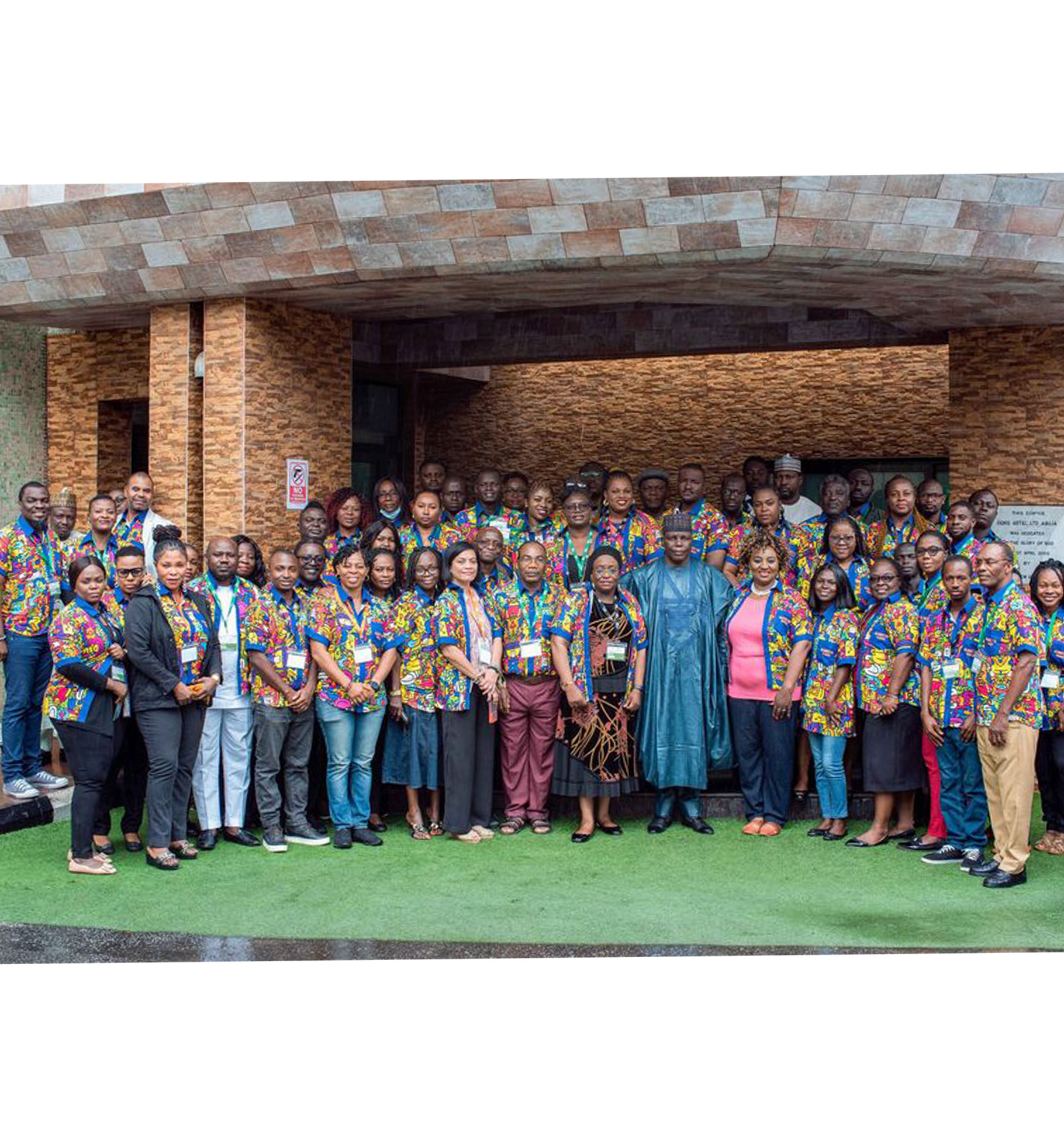
The Alliance for Science (AFS) in conjunction with the Open Forum for Agricultural Biotechnology (OFAB) Nigeria, Boyce Thomson Institute, and the International Institute of Tropical Agriculture (IITA), has organized a 3-day training for scientists and science communicators on Communicating Gene Editing in Abuja, Nigeria.
The training, which started on 19 September 2022, is intended to provide participants with the appropriate communication skills to help them communicate gene editing for food sustainability, nutrition, and security in Africa.
Executive Director of the Alliance for Science, Dr. Sheila Ochugboju, opened the event with a keynote speech. She recognized the need for such training events as a former scientist who completed her postdoctoral research at Oxford University, working on genetic engineering for biological pesticides. She was visibly moved to return to her home country, Nigeria, to welcome scientists and communicators, creating an enabling environment for world-class science and innovation.
Also, IITA Head of Abuja station and BASICS II project leader, Prof. Sanni Lateef, in his remarks at the opening event encouraged the next generation of scientist-participants to exceed the achievements of the older scientists in scientific research and innovations. “Science is evolving, and we need a new generation of science inventors to keep up with it,” he said.
During their different sessions, OFAB Country Coordinator Dr. Rose Gidado and IITA Plantain Transformation Scientist Dr. Valentine Ntui demystified the science of gene editing. They pointed out that genome editing is a revolution for science and medicine that takes advantage of the cell’s DNA repair mechanisms, resulting in many different molecular outcomes.
TIIRA CEO and inventor Dr. Joseph Nderitu from Kenya discussed how science innovations can become a money-making venture when patented and not just for research purposes. He advised scientists and researchers with original ideas and innovations to “own their inventions.”
Training Director Alliance for Science Patricia Nanteza, who joined the workshop online, highlighted the objective of the training, which is to ensure scientists and science communicators can communicate scientific issues, including gene editing in plant breeding, to the public. She also shared step-by-step instructions on how participants can develop a communication framework that will enable them to relay their messages to the stakeholders effectively.
The participants had break-out sessions with communication experts to demonstrate their acquired knowledge. They were also asked to produce communication materials using print (news and opinion writing), social media, and radio/TV. At the end of the training, participants went on a field trip to the National Biotechnology Development Agency (NABDA) to visit their biotech lab, bioinformatics center, and field trials.
A first-time participant, Joy Opuro from Agserver, said the training is “of great value and impactful.”
“I look forward to sharing my newfound knowledge on gene editing. It is a game changer with numerous benefits for farmers and food security in Africa”.
Contributed by Dajie Odok